7 Surprising Old Farmers Almanac Winter Forecast Updates (2026’s Best Guide)
Prepare for the 2026-2027 season with the official Old Farmers Almanac winter forecast. Discover regional snow predictions, extreme temperature trends, and see how accurate this centuries-old formula really is.
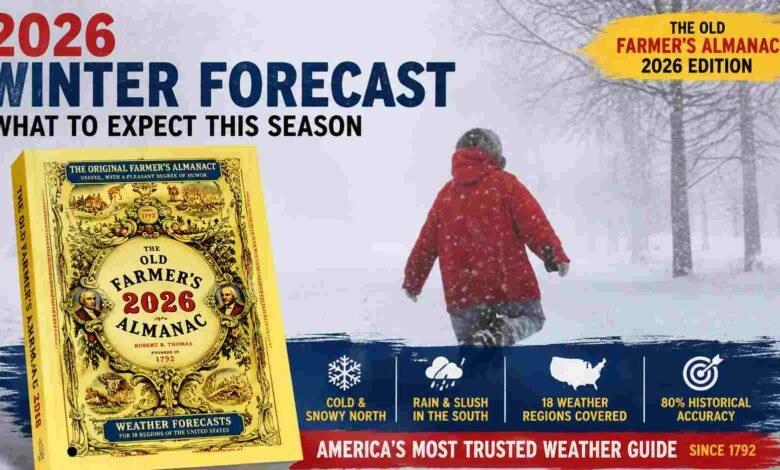
People across the United States want to know what the weather will do this winter. The new old farmers almanac winter forecast is officially available for the upcoming season. The publication expects a highly variable season filled with distinct temperature swings depending on where you live. If you reside in the northern or midwestern states, prepare for significant snowfall and bitter cold. Southern states will likely experience milder temperatures but higher chances of winter rain and slush.
The 2026-2027 winter forecast predicts a divide across the country. Northern regions should expect below-average temperatures and above-average snow. Meanwhile, the southern and western regions will see milder conditions with a mix of rain and sleet.
Key Takeaways
-
The newest old farmers almanac winter forecast is available online and in stores every August.
-
Predictions divide the United States into 18 specific weather regions.
-
Northern states face a higher risk of heavy snow this season.
-
The publication claims an 80% accuracy rate for its forecasts.
-
Modern meteorologists suggest using these predictions for fun rather than strict planning.
-
Do not confuse this publication with the similarly named Farmers’ Almanac.
How the Almanac Predicts the Weather
You might wonder how a book published in the summer can predict a snowstorm in January. The Old Farmer’s Almanac does not use modern satellite models. Instead, it relies on a secret formula developed by its founder, Robert B. Thomas, in 1792.
This formula uses three main scientific factors:
-
Solar Science: The study of sunspots and solar activity.
-
Climatology: The study of long-term weather patterns.
-
Meteorology: The study of the atmosphere.
By tracking how these factors align with historical weather data, the forecasters project what will happen in the future.
Understanding the 18 Weather Regions
The United States is too large for one single weather prediction. Because of this, the publication divides the country into 18 distinct regions. When you check the old farmers almanac winter forecast, you must look at your specific zone. For example, Region 1 covers the Northeast, while Region 11 covers Texas and Oklahoma. The weather expected in New England will be completely different from the Texas panhandle.
The Old Farmer’s Almanac vs. Farmers’ Almanac
When searching for the old farmers almanac winter forecast, this is a very common mistake. Many news outlets and readers confuse the two different almanacs. They are separate publications owned by different companies, and they often release conflicting weather predictions.
Here is how you can tell them apart:
| Feature | The Old Farmer’s Almanac | Farmers’ Almanac |
| Founding Year | 1792 | 1818 |
| Headquarters | Dublin, New Hampshire | Lewiston, Maine |
| Cover Appearance | Yellow cover with a classic design | Orange and green cover |
| Weather Formula | Secret formula based on solar science | Secret mathematical and astronomical formula |
If you are looking for the oldest continuous publication in North America, you want the yellow cover.
How Accurate Are These Weather Predictions?
The editors of the publication proudly claim a historical accuracy rate of about 80 percent. They review their past predictions every year and publish the results of where they were right and where they missed the mark.
However, professional meteorologists view these forecasts with skepticism. Agencies like the National Weather Service rely on supercomputers, atmospheric balloons, and real-time radar data. Scientific experts note that the almanac predictions are often broad enough that they easily apply to general seasonal changes. For instance, predicting “heavy snow in the Northeast in February” is a safe bet based on history, not necessarily a precise forecast.
How to Prepare for the Upcoming Winter
Whether you trust the old farmers almanac winter forecast historical formula or prefer modern radar, getting ready for winter is always a smart idea. Here are a few practical steps you can take before the freezing temperatures arrive:
-
Check your heating system: Have a professional inspect your furnace or heat pump before October.
-
Seal your windows: Keep the cold air out and reduce your heating bills by applying weather stripping.
-
Prepare your vehicle: Check your tire tread, replace old wiper blades, and keep an emergency kit in your trunk.
-
Protect your pipes: Insulate any exposed plumbing in your basement or garage to prevent freezing and bursting.
Conclusion
The release of the seasonal weather forecast is a fun, long-standing tradition. While the old farmers almanac winter forecast provides a great general idea of what to expect, it is best used as a general guide. Keep an eye on local news for short-term, accurate weather updates, and take time now to prepare your home and car for whatever the season brings.
FAQs
When does the new old farmers almanac winter forecast come out?
The new edition is published and released every year in late August.
What is the difference between the two farmers almanacs?
The Old Farmer’s Almanac has a yellow cover and was founded in 1792. The Farmers’ Almanac has an orange and green cover and was founded in 1818.
Can I trust the almanac weather predictions?
The publication claims an 80% success rate, but modern scientists advise using it for entertainment and general trends rather than exact daily planning.
How does the almanac predict snow?
It uses a secret historical formula based on solar activity, historical weather patterns, and atmospheric conditions.
Does the forecast cover my specific city?
No, it covers 18 broad geographical regions across the United States. You will need to look at the general trend for your entire region.