
Who Is Dr Duane Mellor? Dietitian Credentials Explained
Who Is Dr Duane Mellor? The Dietitian Behind the Quotes You Keep Seeing
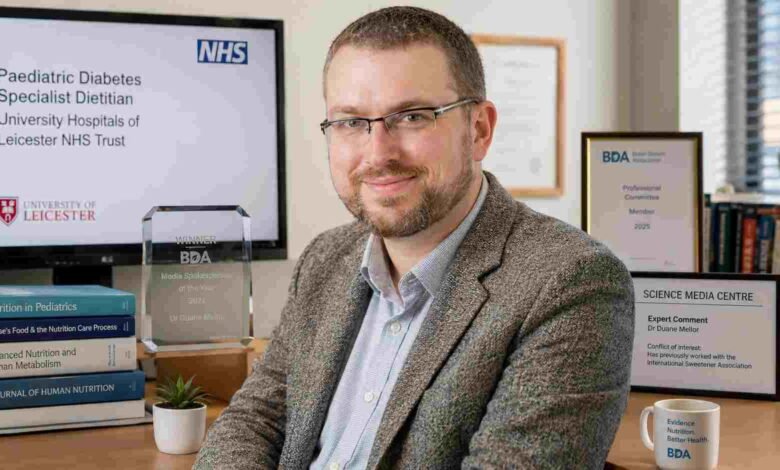
If you’ve read a UK news story about ultra-processed foods, sweeteners, or diabetes in the last few years, there’s a decent chance Dr Duane Mellor’s name was in it. He’s one of the most consistently quoted dietitians in British media — and unlike most people who get “profiled” online, the reason he’s notable has nothing to do with a scandal, an age reveal, or a net worth guess. It’s that journalists keep calling him.
Quick answer: Dr Duane Mellor is a UK registered dietitian, paediatric diabetes specialist at University Hospitals of Leicester NHS Trust, and academic linked to Aston Medical School. He was named the British Dietetic Association’s Media Spokesperson of the Year in 2021, has advised the Food Standards Agency on food-additive safety, and is a regular expert commentator on ultra-processed foods, sweeteners, and diabetes nutrition.
Why journalists call him
Three things make Mellor a go-to quote rather than a one-off source.
He won the industry’s own media award. The British Dietetic Association’s official awards archive lists Dr Duane Mellor as the 2021 winner of Media Spokesperson of the Year — the award given to the volunteer spokesperson judged to have done the most to bring evidence-based nutrition messaging to TV, radio, print, and digital media that year. Aston University’s write-up on the win quoted the BDA judging panel saying he’d “played an integral role in raising the profile of dietitians in the media.”
He’s a working NHS clinician, not just a media face. Recent professional listings, including his entry for the 2026 Diabetes UK Professional Conference, place him as a Paediatric Diabetes Specialist Dietitian at University Hospitals of Leicester NHS Trust. That clinical role sits alongside — not instead of — his academic links to Aston Medical School, where he has held senior teaching and senior lecturer positions and is now described as a visiting academic.
Regulators bring him in for the technical work, not just soundbites. In 2025, the Food Standards Agency commissioned a literature review on the safety of nitrates and nitrites as food additives. The published report names Dr Duane Mellor, alongside Professor Gunter Kuhnle of the University of Reading, as an advisor who provided direction and quality assurance on the methodology and peer review — the kind of unglamorous, technical contribution that doesn’t generate headlines on its own but underpins the ones that do.
Where his commentary actually comes from
Mellor’s public-facing work is dominated by one live debate: ultra-processed foods (UPFs). In 2024 he published a peer-reviewed piece in the International Journal of Food Science and Technology, arguing that food science and technology is “a double-edged sword” — the same industrial processes that made food supplies safer and more stable are now implicated in the UPF-and-disease evidence base, and could equally be part of the fix. That’s a more nuanced position than the “UPFs are simply bad” framing that dominates a lot of coverage, and it’s a useful thing to know before reading one of his quotes on the topic.
He’s also a regular contributor to the Science Media Centre, the organisation UK journalists use to get fast, credentialed reaction to new studies. His SMC comments cover ground including plant-based diets and type 2 diabetes risk, and artificial sweeteners and cancer risk — the latter a topic where nuance and caveats about study design tend to matter more than the headline.
The industry-links question, answered directly
A fair question for anyone quoted repeatedly on food and nutrition: does he have ties to the industries he comments on? The Science Media Centre publishes conflict-of-interest disclosures alongside expert quotes, and its record for Mellor’s comment on a sweeteners-and-cancer study states plainly that he “has previously worked with the International Sweetener Association.” That’s a disclosed, on-the-record link — not a hidden one — and it’s worth knowing when reading his commentary on sweeteners specifically. It doesn’t appear alongside his comments on unrelated topics like diabetes nutrition or UPFs.
Is “dietitian” just a job title, or does it mean something?
It means something specific in UK law. The Health and Care Professions Council regulates a list of protected titles, and “Dietitian” (along with the alternate spelling “Dietician”) is on it — meaning only someone registered with the HCPC can legally use the title. That distinguishes a dietitian from the much broader, unregulated category of “nutritionist” or wellness influencer. The British Dietetic Association’s own biographical listing describes Mellor as an “award-winning registered dietitian,” consistent with that protected status.
He also sits on the BDA’s Professional Committee, according to the BDA’s 2025 joint position statement (with the British Nutrition Foundation and Diabetes UK) on low- and no-calorie sweeteners — a role distinct from his media-spokesperson recognition and one that puts him inside the organisation’s internal policy work, not just its public messaging.
What’s confirmed vs. what isn’t
Confirmed, with sources:
- BDA Media Spokesperson of the Year, 2021 (BDA official awards page)
- Paediatric Diabetes Specialist Dietitian, University Hospitals of Leicester NHS Trust (Diabetes UK conference listing; FSA report)
- Senior academic roles at Aston Medical School, now visiting academic (Aston University; The Conversation)
- Advisor on the FSA’s 2025 nitrates/nitrites safety report
- Member, BDA Professional Committee (BDA 2025 sweeteners position statement)
- Author, 2024 peer-reviewed UPF paper in IJFST
- Prior professional work with the International Sweetener Association, per SMC’s disclosure on his sweetener-related commentary
Not independently verified here, and not relevant to why he’s newsworthy: personal net worth, marital or family status, exact date of birth. None of these have a credible public source attached to them, and none affect his standing as a cited expert — so we’ve left them out rather than guess.
The bottom line
Mellor’s relevance isn’t that he’s famous. It’s that he sits at an unusually well-documented intersection of NHS clinical practice, food-science academia, and regulatory advisory work — which is exactly the combination that makes a source reliable for journalists covering diabetes, sweeteners, and UPFs. If you’ve seen him quoted, the credentials behind the quote hold up; just factor in the disclosed sweetener-industry history when he’s speaking on that specific topic.
Sources
- BDA Media Spokesperson of the Year — award history
- Aston University: “Aston Medical School dietitian named media spokesperson of the year”
- Duane Mellor profile — The Conversation
- FSA: Safety of Nitrates and Nitrites as Food Additives (2025 report)
- Mellor, D. (2024). “The role of food science and technology in navigating the health issues of ultra-processed foods.” International Journal of Food Science and Technology
- Science Media Centre: expert reaction on sweeteners and cancer risk (includes COI disclosure)
- Science Media Centre: expert reaction on plant-based diets and type 2 diabetes
- HCPC: protected titles
- BDA joint position statement on low/no calorie sweeteners (2025)