Voozon.com Review 2026: Traffic Crash, SEO Value, and Link Farm Red Flags
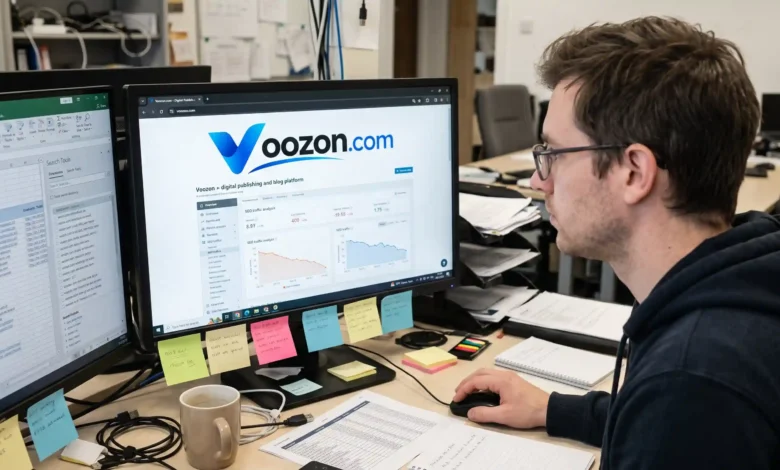
Voozon.com Review 2026: The Anatomy of a Dying Guest Post Platform
Voozon.com is a multi-niche publishing platform that openly sells guest posts and backlinks to marketers. While the website is actively maintained, its value as an SEO tool collapsed following a 97% organic traffic drop in September 2026. It currently operates as a low-tier link farm rather than a trusted editorial publication.
Quick Facts & Key Takeaways
| Metric / Attribute | Voozon.com Status |
|---|---|
| Core Business Model | Paid guest posts and multi-topic content publishing. |
| Organic Traffic | Crashed 97.7% between Sept 14 and Sept 24, 2026. |
| Domain History | 18-year-old domain, repurposed for content in 2019. |
| Topical Authority | Highly diluted (covers tech, health, finance, law, etc.). |
| Editorial Oversight | Weak. Missing author bios; poor source disclosure. |
| Link Quality | Low. Page-level traffic to specific guest posts is near zero. |
| Site Safety | Safe to browse. SSL active, no malware detected. |
The Dual Identity: Digital Magazine or Link Vendor?
Voozon pitches itself to casual readers as an “independent digital media publication” dedicated to high-quality information. Yet, reading the footer, the About page, and the platform FAQs reveals a completely different business model. The site explicitly markets itself as a guest posting platform designed to help businesses build search engine optimization (SEO) authority through backlinks.
Real magazines prioritize readers. Voozon prioritizes selling link placements.
This conflict of interest creates a severe quality issue. The site covers everything from enterprise artificial intelligence to home renovation, legal advice, and travel. When a single domain attempts to rank for every consumer and business niche simultaneously, it fails to build topical relevance. For link builders, relevance dictates actual ranking power. A backlink from a generalist site that writes about a hundred different industries carries far less weight than a link from a tightly focused, niche-specific blog.
The September 2026 Algorithmic Wipeout
If a vendor pitched you a link on Voozon in early September 2026, they likely showed you a screenshot of skyrocketing traffic graphs. At its peak around September 14, estimated monthly visits crossed 205,000.
Ten days later, the floor fell out. By September 24, that number sat at roughly 4,800, a devastating 97.7% collapse.
What causes a drop this violent? Search engine algorithms aggressively target domains that exist primarily to manipulate link graphs without offering unique user value. When a site scales up its publishing volume by accepting unvetted, paid guest posts across unrelated niches, it inevitably triggers spam filters. The algorithmic correction was brutal but entirely predictable.
If you bought a post prior to the crash, your physical link still exists. The problem is that the domain hosting it has been algorithmically devalued, neutralizing any SEO benefit you hoped to gain.
The Homepage Traffic Illusion
Guest post brokers love quoting top-level metrics. They will point out Voozon’s 18-year domain history and its historical domain traffic.
Here is the mechanical reality: search engines evaluate links at the page level, not just the domain level.
The vast majority of Voozon’s historical traffic sat directly on its homepage or was triggered by specific branded search terms. The actual guest posts, the specific, deeper URLs where buyer links live, receive effectively zero organic referral traffic. Buying a link on a site with high top-level metrics means absolutely nothing if the specific article hosting your link is orphaned, receives no internal PageRank flow, and draws zero external clicks.
Furthermore, the 18-year domain age is a mirage. While the URL itself was registered nearly two decades ago, the current iteration of the site only began publishing content in March 2019. Link vendors frequently purchase aged domains at auction to capture their lingering backlink profiles, install a fast WordPress theme, and sell the historical authority to unsuspecting marketers.
Four Glaring Editorial Red Flags
Operating a multi-niche blog is not against any rules. However, auditing Voozon reveals several classic markers of a mass-scale link farm.
1. The E-E-A-T Vacuum
Articles covering sensitive, high-stakes topics like health, finance, and legal compliance are regularly credited to a single generic author name. You will not find writer biographies, linked social profiles, or verifiable credentials. Google demands Experience, Expertise, Authoritativeness, and Trustworthiness (E-E-A-T) for these exact categories. Anonymous financial or medical advice is an immediate negative ranking signal.
2. Hidden Sponsorships
The platform has published promotional pieces about other guest-posting services, presenting them to readers as objective industry advice. Links exchanged for money must carry a rel="sponsored" tag to comply with basic search guidelines. Blurring the line between editorial content and paid placements puts buyers at severe risk of manual actions.
3. Anonymous Accountability
The domain registry details are hidden behind a privacy proxy, and contact is handled through basic email forms rather than a corporate address. If a site claims to be a trusted digital magazine, editorial accountability should be public.
4. The Ghost App Strategy
There is a “Voozon” app on the Google Play Store positioning itself as a full social network featuring instant messaging and personal feeds. Yet, it shows barely 10 total downloads, and the website makes little to no effort to integrate it. In the SEO industry, creating empty apps or automated social profiles is a known tactic used to trick search engine Knowledge Graphs into recognizing the site as a legitimate brand entity. It is an artificial trust signal.
The Real-World Verdict: Should You Buy a Post Here?
Do not build a core ranking strategy around sites following this business model. But does Voozon hold any utility for a practitioner?
When it makes sense:
- It might serve a purpose if you are running a churn-and-burn affiliate site and need cheap brand mentions to diversify an anchor text profile.
- If you have a few dollars to test indexation speeds or want a bare-minimum branded link to dilute a highly optimized backlink profile, Voozon will publish your content.
When you must avoid it:
- You should completely avoid this platform if you operate in YMYL (Your Money or Your Life) sectors.
- Legal practices, medical clinics, and financial services require links from heavily vetted, high-authority industry sources.
- A link from a site that publishes generic health tips directly next to an article about used car sales will do nothing for your search visibility, and may actively harm it.
- Additionally, if you need referral traffic or leads to justify your marketing spend, this placement will return nothing.
Frequently Asked Questions
Is Voozon.com a scam?
No. Voozon is a functional website that publishes content and honors its guest posting agreements. The site is secured with HTTPS and automated tools like ScamAdviser rate it as safe for general browsing. The core concern is entirely about the low SEO quality of the site, not credit card fraud or malware.
Why did Voozon.com lose its search traffic?
Between September 14 and September 24, 2026, Voozon lost approximately 97.7% of its organic Google traffic. This severe drop indicates an algorithmic penalty, which is typical for multi-niche sites that scale paid guest posts without strict editorial quality control.
Do backlinks from Voozon improve SEO rankings?
Following the traffic collapse in late September 2026, the SEO value is negligible. Search engines devalue links from sites with highly diluted topical relevance, unverified authorship, and a history of algorithmic volatility.
Should I buy a backlink on a multi-niche site?
Generally, no. Search engines prioritize strict topical relevance. A backlink from a site that covers everything from enterprise tech to household plumbing passes very little topical authority to your specific industry pages compared to a dedicated, niche-relevant publication.
Sources & References
- RankUp4U: Voozon Review 2026: Is It Worth It for SEO & Guest Posting?, Link quality and author bio data verified.
- MostlyBlogging: Voozon.com: Why It’s Trending & Is It Worth Your Attention?, Traffic drop metrics (Sept 14 – Sept 24, 2026) and app data verified.
- ScamAdviser: Is Voozon.com a Scam or a Legit Website?, Domain age and safety ratings verified.