
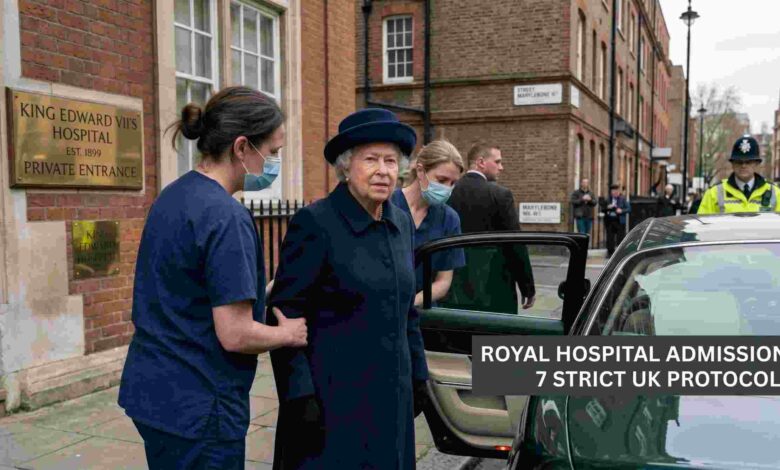
If you turn on the news and see a headline about a queen hospitalized, your first thought is probably about her health. But behind the closed doors of Buckingham Palace, a highly orchestrated constitutional machine immediately springs into action. Managing a royal health crisis is not just about medical care; it is about protecting the stability of the United Kingdom. From appointing stand-ins for state duties to managing media frenzies, the rules are rigid. We are going to walk you through the exact protocol that dictates what happens when a senior royal faces a medical emergency.
When a queen is hospitalized in the UK, the protocol focuses on balancing patient privacy with state continuity. Buckingham Palace issues limited medical bulletins, while constitutional mechanisms, like the Counsellors of State, activate to handle essential royal duties if the monarch or consort is temporarily incapacitated.
-
State duties continue: The government does not pause; substitute royals step in to sign documents.
-
Privacy is paramount: The Palace rarely releases specific medical details unless surgery is involved.
-
Selected hospitals: Senior royals typically use secure private London facilities like The London Clinic or King Edward VII’s Hospital.
-
Media blackouts: Broadcasters follow strict guidelines regarding what they can report from outside the hospital.
-
No immediate successions: Temporary hospital stays do not trigger a change in the line of succession.
The Constitutional Backup Plan: Counsellors of State
The biggest question people ask when a reigning monarch or a queen consort falls ill is: who runs the country? The short answer is the Prime Minister runs the country. The sovereign, however, still has legal duties to perform.
If a monarch is too unwell to carry out their duties, they rely on a system created by the Regency Acts. This involves appointing “Counsellors of State.” These are senior members of the royal family who can temporarily take over specific state functions. They handle tasks like attending Privy Council meetings or signing routine documents. It sounds intense. But it works.
If we see a reigning monarch or a queen hospitalized, the spouse of the sovereign and the next four people in the line of succession over the age of 21 step up. Following the passing of the Counsellors of State Act 2022, Parliament expanded this pool. They wanted to ensure working royals were always available to serve UK Parliament.
Here is a look at who currently holds this power:
| Royal Title | Role in the Protocol | Eligibility |
| Queen Camilla | Counsellor of State | Spouse of the Sovereign |
| Prince William | Counsellor of State | 1st in Line of Succession |
| Princess Anne | Additional Counsellor | Added via the 2022 Act |
| Prince Edward | Additional Counsellor | Added via the 2022 Act |
| Prince Harry | Counsellor of State | 5th in Line (Inactive) |
Pro-Tip: Even if a queen hospitalized scenario occurs, Counsellors of State are highly restricted. They cannot dissolve Parliament or appoint a new Prime Minister. Those powers remain strictly with the sovereign.
How Buckingham Palace Manages the Media
When you hear about a queen hospitalized, you might wonder why the news seems so vague. This is entirely intentional. The royal family views health as a private matter. They only release information when it impacts public duties or when they want to stop wild rumors.
Whenever a senior royal enters a medical facility, the royal communications team follows a strict sequence:
-
The Private Admission: Royals usually arrive at the hospital discreetly, often through secure back entrances away from public view.
-
The Initial Bulletin: If the stay involves a planned procedure or cancelled public events, the Palace issues a short, factual statement to the press.
-
The Royal Rota Activation: UK broadcasters agree to use a pooled camera system. One camera feeds all networks to avoid a massive media circus outside the doors.
-
The Discharge Statement: Once the royal returns home, a final bulletin is released thanking the medical staff for their care.
You might find it frustrating when details are sparse. But this staged approach stops panic and protects the patient’s dignity.
Misconception: The Government Shuts Down
Many people think that if a queen is hospitalized, the UK government goes into lockdown or halts its operations. That is entirely false. Parliament continues its daily business without interruption. The only change is how official documents get signed behind the scenes. The day-to-day lives of British citizens remain completely unaffected.
Where Do the Royals Go for Treatment?
The National Health Service (NHS) is a source of immense pride in the UK. However, for security and privacy reasons, senior royals rarely use public NHS wards. When you read a report about a queen hospitalized, the location is almost always a highly secure private clinic in London.
Historically, King Edward VII’s Hospital in Marylebone has been the primary choice. Established in 1899, it has treated countless members of the royal family over the decades. More recently, The London Clinic in Marylebone was used extensively in 2024 by King Charles and the Princess of Wales.
These facilities offer private entrances, specialized security protocols, and entire floors that can be sealed off. Armed police officers secure the perimeter. Sometimes, flight restrictions are even placed over the airspace to stop paparazzi drones.
International vs. UK Reporting Standards
You will often notice a massive difference in how health news is reported across the globe. An international news outlet might aggressively push a queen hospitalized breaking news alert with unverified, sensational claims. In contrast, British media acts with extreme caution.
UK journalists are bound by strict privacy laws and regulatory codes enforced by Ofcom. They rely solely on verified Buckingham Palace briefings. This is why a rumor about a queen hospitalized might trend on social media for hours before the BBC, ITV, or Sky News even mentions it. They wait for the official nod. It is a matter of ethics and legal compliance.
Next Steps and Wrapping Up
Understanding the protocol behind a queen hospitalized helps you filter out the noise during a royal health scare. Instead of panicking over social media rumors, you now know exactly how the constitutional machinery works to keep the state moving smoothly.
If you want to stay correctly informed during the next royal health update, keep these three actionable steps in mind:
-
Always check official statements from the Royal.uk website or verified Palace social media accounts first.
-
Rely on major UK broadcasters like the BBC for accurate, legally compliant updates.
-
Ignore international tabloids that speculate on medical conditions without verified proof.
FAQs
What actually happens when a queen is hospitalized?
Buckingham Palace activates a privacy protocol and issues a brief statement if public duties are affected. If necessary, Counsellors of State step in to handle official documents.
Do UK laws change if the monarch is ill?
No. UK laws do not change. The daily operations of the government and Parliament carry on as normal, though how royal assent is granted might temporarily shift to appointed stand-ins.
Why doesn’t the public get full medical details?
The royal family considers personal health a private matter. They only share a queen hospitalized update if it directly impacts her ability to perform public engagements or state duties.
Can a hospital stay change the line of succession?
Absolutely not. A temporary medical issue has zero impact on the line of succession. Succession only changes upon the death or official abdication of a monarch.
Which hospital is used for a queen hospitalized situation?
Historically, senior royals use secure private facilities in London. King Edward VII’s Hospital and The London Clinic are the most common choices due to their advanced security measures.
Who takes over if the Queen Consort is ill?
If a Queen Consort (like Queen Camilla) is ill, her specific public engagements are cancelled or postponed. Since she is a Counsellor of State, other eligible royals would simply take up the slack for any state duties she might have handled for the King.
Does the NHS treat the royal family?
While royals strongly support the NHS, they typically use private hospitals for planned treatments to ensure strict security and prevent disruption to public health services.