Colts Explained: Indianapolis Colts, Team History, Roster and Horse Meaning
Indianapolis Colts ki complete guide: team history, current roster, NFL schedule, Super Bowl legacy aur “colt” horse meaning ko asaan alfaaz mein samjhein.
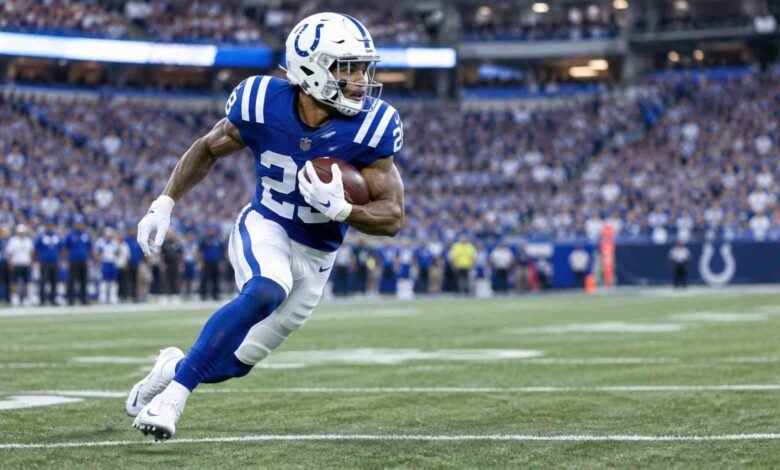
The word Colts most commonly refers to the Indianapolis Colts, a professional American football team in the National Football League. The franchise competes in the AFC South and plays its home games at Lucas Oil Stadium in Indianapolis, Indiana. However, “colt” also has a traditional equestrian meaning: a young male horse.
This guide explains both uses. You will learn about the Indianapolis Colts’ identity, history, championships, current team structure and important players, followed by a clear explanation of what a colt is in horse terminology.
What are the Indianapolis Colts?
The Indianapolis Colts are an NFL franchise based in Indianapolis. They play in the American Football Conference and share the AFC South with the Houston Texans, Jacksonville Jaguars and Tennessee Titans.
The team’s current head coach is Shane Steichen. Its home venue, Lucas Oil Stadium, is located in downtown Indianapolis and is known for its retractable roof, which allows games to be played in a controlled environment while preserving the feel of an outdoor stadium.
The Colts’ identity is closely associated with:
-
A horseshoe logo.
-
Royal blue and white team colors.
-
A long history of influential quarterbacks.
-
The franchise’s earlier years as the Baltimore Colts.
-
A strong connection with Indiana sports culture.
The NFL’s official team page provides current news, scores, standings and schedule information, while the team’s official website publishes roster announcements and franchise updates.nfl+1
Colts history: From Baltimore to Indianapolis
The franchise was established as the Baltimore Colts in 1953. The organization quickly became one of the NFL’s most important teams, particularly during the era of quarterback Johnny Unitas.
The Baltimore Colts won NFL championships in 1958, 1959 and 1968. Their 1958 championship victory over the New York Giants is often remembered as “The Greatest Game,” because it was the first NFL championship game decided in sudden-death overtime.
In 1970, Baltimore won Super Bowl V against the Dallas Cowboys. That victory made the Colts one of the early teams to capture the Super Bowl after the AFL-NFL merger.
The franchise moved from Baltimore to Indianapolis in 1984. Although its location changed, the team retained the Colts name, colors and historical identity. The Pro Football Hall of Fame lists the franchise as the Baltimore Colts from 1953 to 1983 and the Indianapolis Colts from 1984 onward.profootballhof+1
The Indianapolis era
The Indianapolis Colts spent much of the 2000s as one of the NFL’s most consistent teams. The most prominent figure of that period was quarterback Peyton Manning, who helped establish the franchise as a regular playoff contender.
Indianapolis won Super Bowl XLI after the 2006 season, defeating the Chicago Bears 29–17. The game featured Manning’s efficient passing, a strong defensive performance and difficult weather conditions. It remains the Colts’ most recent Super Bowl championship.colts
The team also reached Super Bowl XLIV after the 2009 season but lost to the New Orleans Saints.
Other major figures in the franchise’s modern history include:
-
Johnny Unitas, the iconic Baltimore quarterback.
-
Peyton Manning, the central figure of the Colts’ 2000s success.
-
Marvin Harrison, one of the team’s most productive receivers.
-
Edgerrin James, a powerful and highly productive running back.
-
Reggie Wayne, a key receiver during the Manning era.
-
Dwight Freeney and Robert Mathis, prominent pass rushers.
-
Andrew Luck, who led the team to an AFC Championship Game appearance during his career.
The franchise’s history is broader than any single quarterback. Its identity includes championship teams, legendary players and a continuous lineage from Baltimore to Indianapolis.
Colts roster and current team context
The Colts entered the 2026 season with an initial 53-man roster. The roster included players on offense, defense and special teams, but NFL rosters can change throughout the season because of injuries, trades, practice-squad transactions and free-agent signings.colts
Current roster pages identify Daniel Jones, Riley Leonard and Anthony Richardson Sr. among the quarterbacks, while Jonathan Taylor remains a central name in the backfield. The depth chart also lists players such as Alec Pierce, Josh Downs, Keenan Allen, Tyler Warren and Quenton Nelson in important offensive roles.espn
A roster should not be viewed as a permanent list. The most useful way to evaluate the team is to consider three layers:
Quarterback stability
Quarterback play affects nearly every part of an NFL offense. Indianapolis’ quarterback group includes experienced and developing options, creating an important storyline for the 2026 season.
The main questions include:
-
Who will receive the majority of snaps?
-
Can the starter remain healthy?
-
How effectively will the offense protect the quarterback?
-
Will the team rely more on passing or Jonathan Taylor’s running game?
Offensive line strength
The offensive line protects the quarterback and creates running lanes. Quenton Nelson is one of the most recognizable names in the group, while the broader line includes players such as Bernhard Raimann, Tanor Bortolini, Matt Goncalves and Jalen Travis.espn
A strong line can make the entire offense more efficient. It can also reduce pressure on the quarterback by improving early-down runs and limiting defensive disruption.
Defensive development
The defense includes established veterans and younger players competing for larger roles. Important names listed in current team coverage include DeForest Buckner, Grover Stewart, Laiatu Latu, Arden Key and Jaylahn Tuimoloau.sports.yahoo
For Indianapolis, defensive progress may depend on creating pressure, defending the run and forcing opponents into longer third-down situations.
Colts schedule and AFC South competition
The Colts’ schedule changes every season, but their division opponents remain the Houston Texans, Jacksonville Jaguars and Tennessee Titans.
The division is important because games against AFC South teams affect both the standings and potential playoff tiebreakers. A team does not need to dominate its entire schedule to remain competitive, but it usually must perform well within its division.
The NFL lists Indianapolis’ 2026 schedule with games such as a Week 2 matchup at the Kansas City Chiefs and a Week 3 home game against the Houston Texans. Game times, results and broadcast details can change, so readers should check the official NFL or Colts schedule for the latest information.nfl
When evaluating a Colts game, look beyond the final score. Useful indicators include:
-
Turnover margin.
-
Third-down conversion rate.
-
Red-zone efficiency.
-
Explosive plays allowed.
-
Time of possession.
-
Sacks and quarterback pressures.
-
Rushing success in short-yardage situations.
These measures often explain why a team wins or loses more clearly than the score alone.
What does “colt” mean for a horse?
In horse terminology, a colt is a young male horse, generally under four years old. The exact age convention can vary slightly among equestrian organizations and regions, but the central distinction is sex: a colt is male.
A colt is not necessarily the same as a foal.
For example, a male horse that is six months old can be described as both a colt and a foal. A female horse of the same age is a foal but usually a filly, not a colt.
The word is also used informally in names for sports teams because it suggests youth, speed and athletic energy. That symbolism explains why the Indianapolis franchise uses the Colts name and horseshoe imagery.
Why the Colts name matters
The name connects the NFL team to the history and culture of Indianapolis and the surrounding region. Indiana has a strong association with horse racing, particularly through events such as the Indianapolis 500’s broader sporting identity and the state’s equestrian traditions.
The horseshoe logo is more than decoration. It reinforces the franchise’s connection to horses while creating a simple, recognizable mark that works on helmets, uniforms and merchandise.
For fans, “Colts” can therefore refer to three related ideas:
-
The Indianapolis NFL team.
-
The franchise’s Baltimore history.
-
The image of a young, energetic horse.
Understanding all three meanings helps explain why the name has remained central to the organization for decades.
How to follow the Colts
The best source depends on what information you need:
-
Use the official Colts website for team announcements, news and historical features.
-
Use NFL.com for standings, scores and league-wide schedule information.
-
Use reputable sports databases for depth charts, player statistics and game logs.
-
Check official injury reports before making assumptions about availability.
-
Treat social media rumors cautiously until they are confirmed by the team or league.
Roster and injury information can change quickly. A page published before a game may no longer reflect the active lineup, so date-checking is especially important when researching current Colts players or upcoming games.
FAQ
What are the Colts?
The Colts are an NFL team based in Indianapolis, Indiana. The franchise began as the Baltimore Colts in 1953 and moved to Indianapolis in 1984.
How many Super Bowls have the Colts won?
The franchise has won two Super Bowls: Super Bowl V after the 1970 season and Super Bowl XLI after the 2006 season. It also won NFL championships in 1958, 1959 and 1968.profootballhof+1
Where do the Indianapolis Colts play?
The Colts play home games at Lucas Oil Stadium in downtown Indianapolis.
Who is the Colts’ head coach?
Shane Steichen is the Colts’ head coach according to current NFL team information.nfl
What is a colt horse?
A colt is a young male horse, generally under four years old. A young horse of either sex under about one year old may also be called a foal.
What is the difference between a colt and a filly?
A colt is a young male horse, while a filly is a young female horse. Both terms usually describe horses that have not yet reached adulthood.