
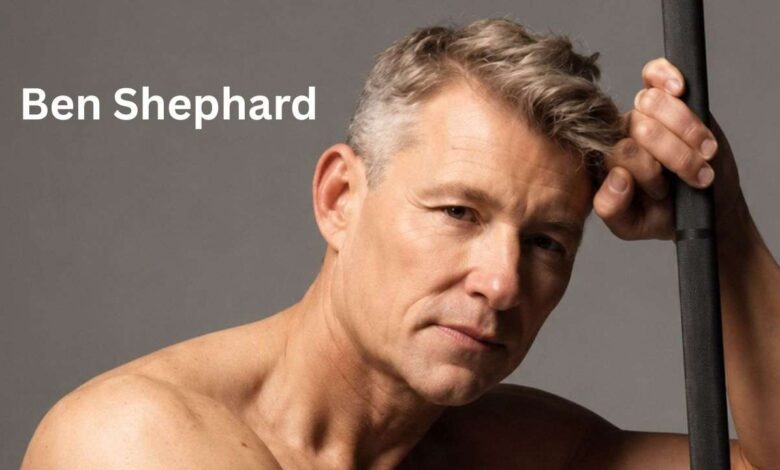
For years, Ben Shephard’s public identity has rested on being the fittest man in the room: marathon finisher, Kilimanjaro climber, Men’s Health cover star. What he didn’t mention, until a video posted to his own Instagram account earlier this year, was that he’d spent roughly ten of those years quietly managing a spine that a 2017 medical report described as suffering from “disc degeneration” and a “right-sided disc bulge.”
The short answer: Ben Shephard, the This Morning and Tipping Point presenter, revealed in early 2026 that he has privately dealt with serious back problems since around 2016–2017, including doctor’s orders to stop heavy squats, deadlifts, kettlebells and rowing. He also separately suffered an undiagnosed ACL rupture, torn meniscus and leg fracture during a five-a-side football game. He says it’s the first time he has spoken about either in detail.
Table of Contents
ToggleKey Facts
| Full name | Benjamin Peter Sherrington Shephard |
| Born | 11 December 1974, Epping, Essex |
| Current roles | Co-host, This Morning (with Cat Deeley, since 2024); host, Tipping Point (since 2012) |
| Past roles | GMTV (2000–2010), Xtra Factor (2004–06), Good Morning Britain (2014–2024), Ninja Warrior UK (2015–19, 2022), Sky Sports’ Goals on Sunday |
| Family | Married to Annie Perks since 25 March 2004; sons Sam (b. 2005) and Jack (b. 2007) |
| Health disclosure | Spinal issues since c. 2016–17; separate ACL/meniscus/leg injury from five-a-side football |
A Brand Built on Endurance
It’s worth being clear-eyed about how thoroughly the “indestructible” image was constructed, because that’s what makes the recent disclosure land differently than a typical celebrity health story. Shephard has completed 14 marathons. He’s run across the UK twice. He climbed Mount Kilimanjaro for charity. He holds Guinness World Records. When he turned 50 in December 2024, he marked it with 50 pull-ups, weight sessions and cold-water dips, and took on a Tough Mudder obstacle course that same October. He’d also just landed the cover of Men’s Health.
None of that was faked. But none of it, on its own, told the whole story — because underneath the training log was a spine that had been quietly deteriorating for years, and a knee injury he’d played straight through without realising how bad it was.
What the 2017 Medical File Actually Said
According to the account Shephard gave in his own video, doctors examined his back roughly ten years ago and found it had “deteriorated to a point it wasn’t just a gnawing ache.” A file from September 2017 recorded a “disc degeneration” and a “right-sided disc bulge.” The advice that followed was specific and, for a man whose public identity ran on physical challenge, fairly restrictive: stop heavy weight-bearing squats and deadlifts, avoid kettlebells, stop rowing, and moderate his running.
He described the situation bluntly: his back, in his words, was “knackered.”
That note sat in the background of a career that continued largely unchanged from the outside — GMTV gave way to Good Morning Britain, which gave way to This Morning, and the marathons and charity challenges kept coming. Shephard has said the pain fluctuated over the years rather than staying constant, and that there was a further “catastrophic moment” with his back more recently, in February, that pushed him toward finally addressing it — and talking about it.
The Second Injury: An ACL Tear He Didn’t Notice
Separately from the back issue, Shephard has also described a knee injury sustained during a five-a-side football match, in comments shared on Instagram. In his own words: “Without realising, I have ruptured my ACL, I’ve torn the meniscus and I’ve fractured part of my leg as well. I carried on playing for 25 minutes. It turns out I severed all of my nerves which is why I carried on playing.”
It’s a detail that, read alongside the back disclosure, complicates the “endurance athlete” framing rather than reinforcing it. A body that could sustain a torn ACL and a leg fracture without the injured party immediately registering it isn’t simply tough — it’s a body someone has learned, consciously or not, to push past its own warning signs.
How He Manages It Now
Shephard hasn’t described giving up physical activity — he says he built a strong core and tight glutes specifically to protect the area, and in a fan Q&A said the reinforcement work has held up even to rough-and-tumble with his kids. He’s also said he uses glucosamine supplements for joint and back pain, alongside magnesium. Marathons, by his own account, are no longer part of his routine, but he’s continued taking on physical challenges in other forms — pull-ups, cold-water exposure, and appearing as a supervising presenter on ITV’s mountain-trek competition series The Summit.
Osteopath Nadia Alibhai, asked by HELLO! to comment on the kind of symptoms Shephard described, noted that conditions like his can go “largely unnoticed for years,” and that many people manage them through osteopathy, physiotherapy and core strengthening well enough that colleagues and audiences never clock the problem — or that the person managing it sometimes ignores it themselves. That’s a plausible clinical read on how a working TV presenter could carry a “knackered” back through more than a decade of daily broadcasting without it becoming public.
What’s Confirmed vs What’s Not
Confirmed, from Shephard’s own public statements and reporting on them:
- The September 2017 medical findings and the doctor’s specific activity restrictions.
- The ACL rupture, meniscus tear and leg fracture from a five-a-side game, and that he played on afterward.
- That he has described this, in his own words, as the first time he has spoken about the back issue “in detail.”
Not confirmed in the sources reviewed for this piece:
- The exact date of the ACL/meniscus injury.
- Any surgical intervention — the reporting describes management (physio, core work, supplements) rather than surgery, but no source explicitly confirms whether surgery was or wasn’t performed.
- Net worth, salary at ITV, or any figures around his earnings — none of this is documented in the sources used here, and any number circulating online for these should be treated as unverified rather than repeated as fact.
Why This Is the More Interesting Story
Most of what’s published about Ben Shephard online falls into two categories: filmography-style reference entries (Wikipedia, IMDb) and commercial speaker-bureau profiles built to sell him as an awards host and brand ambassador. Both are accurate as far as they go, and both are built around the same highlight reel — marathons, Kilimanjaro, Guinness World Records, a stacked list of TV credits. What they don’t do is explain the years running underneath that reel, where a genuinely serious, medically documented spinal condition was being managed quietly, on his own terms, while the public-facing version of Ben Shephard kept training for the next challenge. That’s not a contradiction so much as a more honest picture of what “staying in shape” can actually look like for someone in his late 40s and early 50s — effortful, occasionally painful, and not always visible.
Further Reading
Readers interested in the broader picture of Shephard’s career shift from breakfast television to This Morning, or in his charity endurance work over the past 15 years, may want to look at his Wikipedia entry for a full chronological career record, or HELLO!’s ongoing coverage for the most current family and health updates.
Sources
- Wikipedia, “Ben Shephard” — biographical and career timeline
- IMDb, Ben Shephard biography and trivia pages
- HELLO! magazine, “Ben Shephard’s secret 10-year recovery following ‘serious injuries’ in his 40s” (2026)
- Entertainment Daily, “Ben Shephard reveals true extent of devastating health battle” (2026)
- Surrey Live / GetSurrey, “Ben Shephard’s crippling health battle and go-to supplement he swears by” (2024)
- YMU (talent agency) official artist profile — career and book/podcast credits