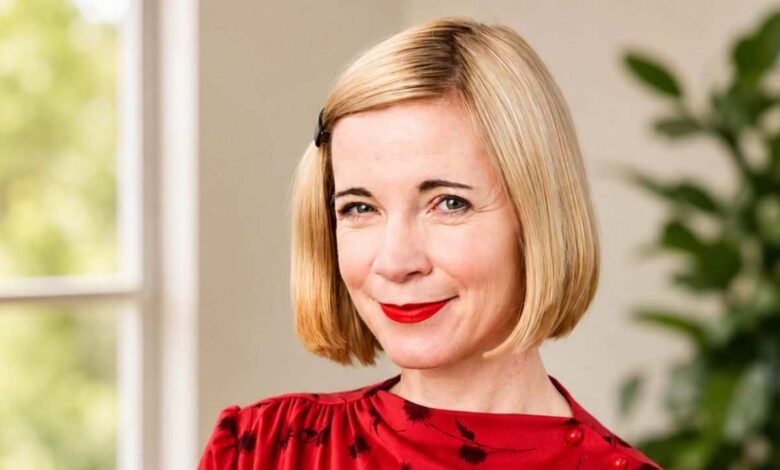
Lucy Worsley spent two decades unlocking the same set of buildings — the Tower of London, Hampton Court, Kensington Palace, Kew — as joint chief curator at Historic Royal Palaces. In 2025, for the first time in her adult working life, she cleared out her office at Hampton Court and didn’t have one to go to the next Monday. What she’s built instead, in the months since, says more about the current state of the “TV historian” career than another rundown of her documentary back-catalogue would.
The short answer: Lucy Worsley left her role as joint chief curator at Historic Royal Palaces, a post she’d held since 2003, after announcing in October 2024 that she planned to step down by the end of that year. Her own account suggests the actual clear-out happened into 2025. She has since remained active as a broadcaster for the BBC and PBS while building an independent newsletter, memoir and stage-show career under the banner of “historian at large.”
Table of Contents
ToggleKey facts
| Full role at HRP | Joint chief curator, Historic Royal Palaces (2003–2024) |
| Education | BA, New College, Oxford (1995); DPhil, University of Sussex (2001), on the architectural patronage of the 1st Duke of Newcastle |
| Honour | Appointed OBE in the 2018 Birthday Honours for services to history and heritage |
| Departure announced | October 2024, effective end of that year (Wikipedia); her own newsletter frames 2025 as the year she actually left the building |
| Current status with HRP | Ambassador for the charity (per her own social bios), not fully severed |
| New/forthcoming work | Lucy Worsley: Victorian Murder Club (BBC Two, 2026); Lucy Worsley Investigates: The American Revolution (BBC Two/PBS, 2026); a memoir of her HRP years (autumn 2026); Queens and Kings: An Unusually Personal History (2026) |
A departure that happened in two stages
Most write-ups treat the HRP exit as a clean, single event. It wasn’t quite. Wikipedia records that in October 2024, Worsley announced she’d be stepping down “at the end of the year” to focus on her Lady Killers podcast. That’s the official version, and it’s the one that got picked up by trade press like the Museums Association at the time.
But Worsley’s own account, published on her Substack “About” page, tells a slightly different story about timing: “2025 was a bit of a turning point in my life,” she writes. “After 21 years as Chief Curator at the charity Historic Royal Palaces in London, I cleared out my office at Hampton Court to begin new adventures as a historian at large.” That’s not necessarily a contradiction — institutional handovers often stretch past their announced date, and 21 years from 2003 lands in 2024 almost exactly, give or take a few months either side. But it does mean the tidy “she left at the end of 2024” line repeated across aggregator sites slightly overstates how clean the cut was. The more accurate framing is: announced late 2024, actually wound down into 2025.
She hasn’t cut ties completely, either. Her Instagram and Facebook bios describe her current relationship with HRP as an “Ambassador for the charity” — a step down from a salaried executive curator role, but not a full break.
Building a platform instead of holding a post
What’s notable about the period since is less the departure itself than what she’s replaced it with. Rather than moving to another institutional post, Worsley has spent the past year assembling something closer to an independent media operation, run largely in her own name rather than a palace’s.
The clearest evidence is the newsletter. “My Life in the Past” runs on Substack, arrives weekly, and — by her own description — offers subscribers “some access to archives, including my live video chats with other historians.” It’s a direct-to-reader model that sidesteps the institutional press office entirely, something a chief curator answerable to a heritage charity’s trustees couldn’t easily run in the same voice. Alongside it sits an active spread of channels: TikTok, Instagram (239,000 followers, per her bio there), Threads, Bluesky and X, all feeding the same “historian at large” persona rather than the “Historic Royal Palaces” brand she represented for two decades.
None of this has come at the expense of television work, which is worth noting because a common assumption about people leaving long-held institutional roles is that they’re winding down. Worsley isn’t. Two new series are dated for 2026: Lucy Worsley’s Victorian Murder Club, a three-part BBC Two series reopening the Thames Torso Murders case, and Lucy Worsley Investigates: The American Revolution, a two-part BBC Studios production for BBC Two and PBS timed to the 250th anniversary of the Declaration of Independence, premiering across April 2026 in the US. Both were commissioned and produced through the same broadcaster relationships (BBC Studios Specialist Factual, PBS) that predate her HRP exit — so the departure freed up capacity rather than triggering a career pivot away from broadcasting.
The book that closes the loop
Perhaps the most direct evidence that this is a considered transition rather than a drift is the memoir. According to her talent agency KBJ Management, “her historical memoir of her years with HRP will be published in autumn 2026” — meaning the institutional chapter isn’t being quietly left behind so much as turned into content in its own right. It sits alongside a separate 2026 title, Queens and Kings: An Unusually Personal History, listed in her Wikipedia bibliography, which suggests two distinct books drawing on the same two decades of access to royal archives and buildings most historians never get close to.
Live performance is the other plank. KBJ describes her as “a popular live performer, playing to sell-out audiences across the UK with her one-woman shows about Jane Austen and Agatha Christie” — work that, again, predates the HRP departure but which now sits as one of several income streams rather than a side project around a day job.
What’s confirmed versus what’s often assumed
Confirmed: the HRP role ran 2003–2024; she announced her departure in October 2024; she remains an Ambassador for the charity rather than fully disconnected from it; she has ongoing commissioned work with BBC Studios and PBS; a memoir and a separate history book are both dated for 2026.
Often assumed but not clearly stated in any of the sources checked: a precise net worth figure (not found in any source used here — treat any specific number circulating online as unverified); the exact month in 2025 she physically left her Hampton Court office; whether the Ambassador role is paid or honorary.
One recurring point of confusion worth clearing up directly, since it shows up regularly in search results: Lucy Worsley is not related to the Duke of Kent’s family, despite sharing a surname associated with British nobility in some searchers’ minds. She addressed this herself in a Guardian Q&A, and no source used for this piece suggests otherwise.
The bigger picture
Worsley’s move isn’t unique among British broadcasters — plenty of TV historians build parallel newsletter and podcast audiences — but the scale of the institutional role she stepped away from (two decades running curatorial work across five royal sites) makes her transition a useful case study in how someone senior inside a heritage institution converts that authority into an independent media brand without losing the broadcaster relationships that built the profile in the first place.
Related reading
Readers interested in the broadcasting side of this story may want to look separately at the production credits behind Lucy Worsley Investigates: The American Revolution, or at the BAFTA-winning Suffragettes with Lucy Worsley (2018), which KBJ Management credits as a turning point in her “immersive” documentary style.
Sources
- Wikipedia, “Lucy Worsley”
- IMDb, Lucy Worsley
- Official site
- “My Life in the Past” (Substack), About page
- KBJ Management, client page
- PBS, “Lucy Worsley Investigates: The American Revolution” press release, February 2026
- Museums Association, “Lucy Worsley leaving Historic Royal Palaces,” October 2024 (cited via Wikipedia)
- Countryfile.com, “Who is Lucy Worsley?”