
Europe’s Largest Hotel Operator Insolvency: 5 Key Risks
What Revo Hospitality Group's Self-Administration Means for Hotel Bookings, Property Owners, and European Tourism
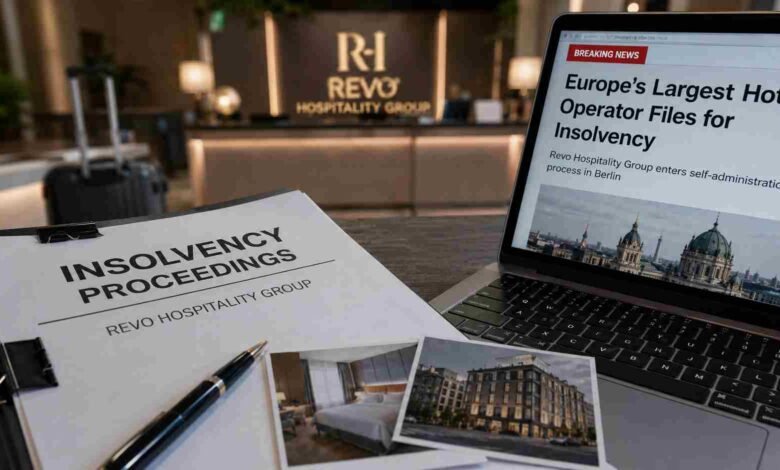
News regarding Europe’s largest hotel operator insolvency broke in January 2026, when Revo Hospitality Group filed for self-administration at the Charlottenburg District Court in Berlin. As the largest third-party hotel management firm on the continent, the scale of Europe’s largest hotel operator insolvency impacts around 140 companies within the group and over 250 properties across 12 countries. These locations include popular destinations managed under global brand names such as Hilton, Marriott, Accor, IHG, and Wyndham.
If you have an upcoming trip booked in Europe or manage commercial real estate, knowing how this restructuring works is essential for protecting your money and plans.
Quick Summary for Search: In January 2026, news of Europe’s largest hotel operator insolvency emerged when Revo Hospitality Group, managing over 250 hotels, filed for self-administration in Berlin. Driven by rapid expansion, rising energy and wage costs, and lower 2025 revenues, the process affects properties across 12 nations. Around 125 hotels in Germany and Austria continue to operate normally while administrators seek new investors.
Key Takeaways
-
Massive Portfolio: Revo Hospitality Group (formerly known as HR Group until 2025) managed more than 250 hotels in 146 European cities.
-
Self-Administration Model: Filing under self-administration allows the company to continue running daily hotel operations while court-appointed supervisors guide financial restructuring.
-
Short-Term Bookings: Operations across approximately 125 hotels in Germany and Austria remain open, with bookings through March 2026 expected to be honoured.
-
Third-Party Model: Global hotel chains do not own these buildings; Revo managed day-to-day operations under franchise agreements.
-
UK Consumer Protections: UK travellers affected by future hotel disruptions can pursue refunds using credit card Section 75 claims or debit card chargebacks.
What Triggered Europe’s Largest Hotel Operator Insolvency?
Revo began as a modest company in 2008 with a single property in Leipzig, Germany. By 2020, the portfolio held 51 hotels. Following the post-pandemic period, the company undertook an aggressive expansion strategy that saw its portfolio surge past 250 properties.
2008: Founded in Leipzig (1 Hotel)
  │
2020: Portfolio grows to 51 Hotels
  │
2021-2025: Aggressive expansion past 250+ Hotels across 12 Countries
  │
Late 2025: Liquidity pressure, high wage/energy costs, lower revenue
  │
Jan 2026: Insolvency filing for ~140 group companies in Berlin
This rapid growth created operational hurdles. In official statements explaining Europe’s largest hotel operator insolvency, the company highlighted several factors that led to severe liquidity issues:
-
High Overhead Costs: Sharply increased expenses for energy, food, rent, and rising national minimum wages squeezed profit margins.
-
Integration Friction: Merging hundreds of newly acquired hotel teams led to duplicate administrative structures and higher operating overhead.
-
Revenue Shortfalls: Guest room occupancy levels and total revenues for 2025 fell well below internal projections, creating a significant shortfall in cash flow.
Understanding the White-Label Hotel Model
To understand why a hotel can stay open during Europe’s largest hotel operator insolvency, you need to understand how white-label management works.
Most travellers assume that when they stay at a Hilton or Marriott, the parent corporation owns and runs the hotel. In reality, modern hospitality relies on a three-tier system:
| Stakeholder Tier | Primary Role | Impact of Operator Insolvency |
| Property Owner | Owns the physical real estate and building. | May face unpaid lease fees; can re-lease the building or negotiate new terms under insolvency rules. |
| Brand Franchisor (e.g. Accor, Marriott) | Licenses the brand name, marketing, and reservation engine. | Protects brand standards; can transfer the franchise licence to a new operator if standards slip. |
| White-Label Operator (Revo Group) | Employs hotel staff and manages daily operations. | Enters court supervision, restructures debt, and seeks fresh investment capital. |
Because Revo acted as the operator rather than the brand owner or landlord, the physical hotels remain intact. In fact, approximately 125 properties in Germany and Austria continue to function with around 5,500 staff supported by temporary federal wage funds through March 2026.
How This Insolvency Affects UK Travellers
If you have booked a European hotel stay for 2026, panic is unnecessary, but verifying your reservation details is essential.
What Happens to Existing Bookings?
For stays booked through March 2026, administrators expect hotel operations to run as scheduled. Hotels in Germany and Austria under self-administration are accepting guests normally. However, stays planned for later in 2026 could see changes if management transfers to new companies or if specific leases are cancelled during court restructuring.
4 Steps UK Travellers Should Take Right Now
-
Contact the Hotel Directly: Ring or email the specific hotel reception desk where you plan to stay. Confirm that your reservation number is active in their internal system.
-
Review How You Paid: Check whether you booked directly through the hotel website, a main brand site (such as Marriott Bonvoy or IHG), or an online travel agency (OTA). Bookings made through major brand sites or OTAs often carry additional rebooking guarantees.
-
Use UK Card Payment Rights: If a hotel closes and fails to provide accommodation, UK consumer laws offer strong protection. If you paid over £100 using a UK credit card, you can submit a claim under Section 75 of the Consumer Credit Act 1974 to recover your money from your card provider. For debit card payments, request a Chargeback through your bank.
-
Check Travel Insurance Policies: Review your travel policy for End Supplier Failure cover or general accommodation cancellation benefits.
Property Impact of Europe’s Largest Hotel Operator Insolvency
Beyond immediate guest stays, Europe’s largest hotel operator insolvency creates ripple effects across the commercial real estate sector.
Under German insolvency laws, an administrator or debtor-in-possession can terminate lease contracts as a tenant with three months’ notice, regardless of long-term lease commitments. This creates specific challenges for property owners:
-
Cash Flow Gaps: Landlords face sudden rental income gaps if an operator cancels long-term fixed leases early.
-
Shift to Flexible Contracts: Financial institutions and investors are moving away from fixed long-term lease models. Future deals will likely feature hybrid performance-linked leases or extra termination rights for landlords if financial targets are missed.
-
Stricter Operator Vetting: Property owners now demand greater financial transparency and credit checks before signing management agreements with third-party operators.
Common Misunderstandings About Hotel Insolvencies
A common mistake is assuming that a brand name like Hilton, Marriott, or Accor has gone bankrupt when headlines announce Europe’s largest hotel operator insolvency.
These global hotel chains remain financially separate from third-party operators. Revo bought franchises to run those locations, but the global brand parent companies do not share Revo’s debt. If Revo exits a location, the property owner can typically sign a new agreement with another management firm to keep the hotel open under the same brand banner.
For more details on financial protections when services fail, you can read the official MoneyHelper guide on credit card protection provided by the UK Money and Pensions Service. Further official legal context on insolvency procedures is available on the GOV.UK insolvency guidance page.
Conclusion and Next Steps
The corporate restructuring following Europe’s largest hotel operator insolvency demonstrates that rapid expansion without careful cost control carries major risks, even for market leaders. While short-term disruption for travellers appears limited thanks to German self-administration rules, the market will change how European hotel leases are negotiated for years to come.
If you are planning European travel or managing hotel investments, follow these three steps:
-
Verify active reservations directly with European hotel property staff.
-
Keep complete digital receipts and credit card records for all travel bookings.
-
Monitor official restructuring updates from administrators as the summer 2026 investment deadline approaches.
(FAQs)
Which hotels are involved in Europe’s largest hotel operator insolvency?
Revo managed over 250 properties across 12 European countries. The portfolio includes white-label operations for global brands such as Accor, Hilton, Marriott, IHG, and Wyndham, alongside Revo’s own labels like Hyperion, Vagabond Club, and Aedenlife.
Are my upcoming hotel reservations still valid?
Yes, in most cases. Stays booked through March 2026 are expected to proceed as planned, particularly across the 125 hotels operating under self-administration in Germany and Austria. However, contacting your hotel directly to confirm is recommended.
Will hotel staff lose their jobs?
Revo stated that around 5,500 staff members across 125 German and Austrian locations will remain employed during the restructuring period. However, the group indicated that up to 34% of its overall 8,300-person workforce across Europe could face layoffs depending on investor negotiations.
How can UK travellers claim money back if a hotel closes?
If a hotel cancels your reservation and fails to issue a refund, you can request a Chargeback through your bank for debit card payments or file a Section 75 claim with your credit card provider if the purchase exceeded £100.
What caused Europe’s largest hotel operator insolvency?
Revo faced liquidity pressure caused by rapid portfolio growth after 2020, rising minimum wages, increased energy and food costs, and lower overnight stay revenues in 2025 than originally forecast.