
Charles Huggins: The Nobel Doctor Behind Hormone Therapy
The verified story of Charles Huggins, the Nobel-winning doctor whose hormone research changed cancer history
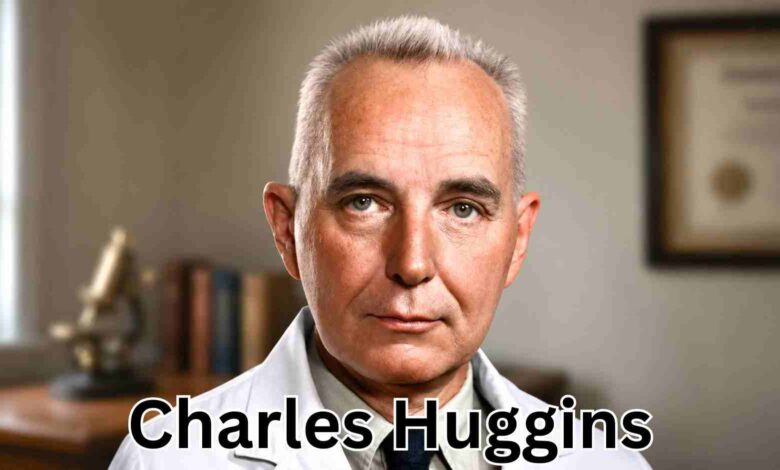
Charles Huggins is not a celebrity in the tabloid sense. He is searched because his name sits at an important point in cancer research history.
Charles Brenton Huggins was a Canadian-born American surgeon and urologist whose work helped show that hormones could affect the course of certain cancers. His best-known public recognition came in 1966, when he received the Nobel Prize in Physiology or Medicine for discoveries involving hormonal treatment of prostatic cancer. Nobel Prize facts
This profile keeps the focus on verified facts: who he was, why the Nobel committee recognized his work, how the University of Chicago fits into his story, and which online claims should not be repeated without strong sourcing.
Charles Huggins was a Canadian-born American surgeon and urologist best known for showing that hormones could affect the course of prostate cancer. He received the 1966 Nobel Prize in Physiology or Medicine for discoveries involving hormonal treatment of prostatic cancer and spent much of his career at the University of Chicago.
Key Takeaways
- Charles Brenton Huggins was born in 1901 and died in 1997.
- He received the 1966 Nobel Prize in Physiology or Medicine.
- His Nobel work focused on hormonal treatment of prostatic cancer.
- His main U.S. career connection was the University of Chicago.
- His research helped shape medical understanding of hormone-dependent cancers.
- Claims about net worth, private illness details, or gossip-style family stories are not verified by strong sources.
- This article explains medical history only. It is not medical advice.
Quick Start: Who Was Charles Huggins?
Charles Huggins was a physician-scientist known for cancer research, especially the relationship between hormones and prostate cancer. In simple terms, his work helped prove that some cancers could respond to changes in hormone signals.
That matters because it changed how researchers thought about cancer. Instead of viewing every cancer as fully independent from the body’s chemical signals, Huggins showed that hormone biology could affect cancer behavior.
For readers checking his story, start with these verified points:
- Use his full name, Charles Brenton Huggins, to avoid confusing him with other people.
- Check NobelPrize.org first for prize facts and official wording.
- Use University of Chicago sources for his U.S. academic and research legacy.
- Treat medical details as history unless a current clinical source explains them.
- Avoid repeating net worth or private-life claims unless a strong authority confirms them.
Common mistake: Do not write that Huggins “discovered cancer” or invented all modern hormone therapy. His verified Nobel recognition was for discoveries concerning hormonal treatment of prostatic cancer.
Charles Huggins Verified Bio Table
The safest way to cover Charles Huggins is to keep the main facts clear and separated from unverified claims.
| Fact | Verified Detail | Best Source Type |
|---|---|---|
| Full name | Charles Brenton Huggins | Nobel biography |
| Born | September 22, 1901, in Halifax, Nova Scotia, Canada | Nobel facts |
| Died | January 12, 1997, in Chicago, Illinois | Nobel facts |
| Known for | Hormonal treatment of prostatic cancer | Nobel Prize facts |
| Nobel Prize | Physiology or Medicine, 1966 | Nobel Prize facts |
| Main U.S. institution | University of Chicago / Ben May Laboratory for Cancer Research | Nobel + university sources |
| Field | Surgery, urology, and cancer research | Nobel + Britannica-style biography |
Huggins’s biography is not hard to summarize, but it is easy to distort. The strongest version is simple: he trained as a physician, built a major research career in Chicago, and became one of the key figures in the history of hormone-related cancer research.
His education also supports that path. He attended Acadia University and Harvard University, where he received his M.D. in 1924. He then trained at the University of Michigan Hospital before joining the University of Chicago faculty in 1927. Charles Huggins biographical page
That University of Chicago connection is central. At the time of his Nobel award, his listed affiliation was the University of Chicago’s Ben May Laboratory for Cancer Research in Chicago, Illinois.
Why Charles Huggins Won the Nobel Prize
Huggins received the 1966 Nobel Prize in Physiology or Medicine for work tied to cancer and hormones. The official Nobel wording says the award recognized his discoveries concerning “hormonal treatment of prostatic cancer.”
That phrase can sound technical, but the core idea is direct. “Prostatic cancer” means prostate cancer. “Hormonal treatment” refers to treatment approaches that affect hormone signals in the body.
What “Hormonal Treatment of Prostatic Cancer” Means
Huggins showed that the course of prostate cancer could be affected by hormones. Around 1940, his work helped establish that changing hormone activity could influence how prostate cancer behaved.
That finding gave researchers a new way to think about cancer. It suggested that some cancers were not only masses of uncontrolled cells, but also diseases that could be influenced by the body’s hormone environment.
This does not mean readers should use a history article to make treatment decisions. Modern prostate cancer care is complex, and anyone facing a diagnosis should rely on qualified clinicians and current medical guidance.
What He Did Not Discover
Huggins’s work was important, but it should not be exaggerated.
He did not discover prostate cancer. He did not create every modern cancer treatment. He did not prove that all cancers respond to hormones.
What he did show was narrower and more important: hormone signals could affect the course of certain cancers, especially prostate cancer. NobelPrize.org also notes that he developed hormone treatment for breast cancer, which connects his work to the wider history of hormone-dependent cancers.
The cleanest article angle is not “mystery” or “hidden truth.” It is this: Charles Huggins helped change cancer research by proving that hormones could matter in cancer treatment history.
Charles Huggins Timeline
Charles Huggins’s story is easier to follow when the verified dates are kept in order. The timeline also helps separate public facts from loose online summaries.
- 1901 — Charles Brenton Huggins was born in Halifax, Nova Scotia, Canada.
- 1924 — He received his M.D. from Harvard University.
- 1924–1926 — He trained at the University of Michigan Hospital.
- 1927 — He joined the University of Chicago faculty.
- 1951 — He served as Director of the Ben May Laboratory for Cancer Research.
- 1966 — He received the Nobel Prize in Physiology or Medicine.
- 1997 — He died in Chicago, Illinois.
| Year | Event | Why It Matters |
|---|---|---|
| 1901 | Born in Halifax, Nova Scotia | Establishes his early biographical record |
| 1924 | Received M.D. from Harvard | Marks his formal medical training |
| 1927 | Joined University of Chicago | Began his main U.S. academic chapter |
| 1951 | Directed the Ben May Laboratory | Connects him to a major cancer research setting |
| 1966 | Received the Nobel Prize | Confirms his global medical-science recognition |
| 1997 | Died in Chicago | Completes the verified public timeline |
Pro tip: Use the full name Charles Brenton Huggins when checking sources. It reduces the chance of confusing him with another person named Charles Huggins.
University of Chicago and the Ben May Laboratory Connection
Huggins’s U.S. career is closely tied to the University of Chicago. NobelPrize.org lists his award-time affiliation as the University of Chicago’s Ben May Laboratory for Cancer Research in Chicago, Illinois.
That matters for readers because it anchors his story in a verified institution, not just a list of copied biography facts. It also helps explain why University of Chicago sources remain useful when checking his research legacy.
The University of Chicago’s Ben May Department identifies Huggins as its late Nobel Prize-winning founder and keeps his research spirit visible through the phrase:
“Discovery is our business.”
That quote works well in a biography because it reflects his research identity without turning the article into hype. University of Chicago Huggins Symposium
Real Example: Why the Institution Matters
A weak profile might only say, “Charles Huggins won a Nobel Prize.” A stronger profile explains where that work was rooted.
His Nobel affiliation connects him to the University of Chicago and the Ben May Laboratory. That gives the reader a clearer answer: Huggins was not only a Nobel laureate; he was part of a major U.S. academic research setting that shaped his public legacy.
What His Cancer Research Changed
Huggins helped change how researchers thought about some cancers. His work showed that hormone signals could affect the course of prostate cancer.
That may sound simple now, but the idea mattered. It helped support the view that some cancers can respond to changes in the body’s hormone environment.
This section is medical history, not treatment guidance. Cancer care changes over time, and readers with health questions should use current medical sources and qualified clinicians.
The Prostate Cancer Connection
The Nobel committee recognized Huggins for discoveries concerning hormonal treatment of prostatic cancer. In modern wording, that means prostate cancer.
The key point is not that he found a cure for every case. The key point is that his work showed a link between hormone activity and the course of prostate cancer.
The National Cancer Institute explains that early prostate cancers need androgens to grow. Androgens are hormones involved in prostate cancer growth. Hormone therapies can decrease androgen levels or block androgen action. National Cancer Institute hormone therapy information
That current context helps readers understand why Huggins’s older discovery still appears in medical-history discussions.
Mini Case Study: Prostate Cancer Research Legacy
Before Huggins’s work, cancer was often discussed as if tumors grew apart from the body’s hormone signals.
His prostate cancer research helped shift that thinking. Around 1940, he showed that hormones could affect the course of prostate cancer. NobelPrize.org also notes that hormone treatment for prostate cancer quickly gained traction after his work.
That is why the safest article angle is precise: Huggins helped prove that hormones could matter in cancer treatment history.
The Breast Cancer Research Extension
Huggins is best known for prostate cancer, but his work was not limited to that area. NobelPrize.org also states that he developed hormone treatment for breast cancer.
This point should be handled with care. It belongs in the article as historical context, not as a claim about what any patient should do today.
Mini Case Study: Hormone-Dependent Cancer Thinking
Huggins’s broader importance sits in the idea of hormone-dependent cancers. That means some cancers may use hormone signals as part of their growth process.
Britannica describes him as a Canadian-born American surgeon and urologist whose work demonstrated the relationship between hormones and certain cancers. That short description captures why his name still matters in oncology history.
Mid-Article Summary
- Charles Huggins is best understood as a Nobel-winning medical researcher, not a gossip-style celebrity.
- His verified legacy centers on hormone-related cancer research, especially prostate cancer.
- The University of Chicago connection is a core part of his U.S. career story.
- Medical-history facts should not be turned into treatment advice.
- Claims about net worth, private illness, or rumor-based family details should be left out unless a strong source confirms them.
Confirmed vs Unconfirmed Claims About Charles Huggins
Many biography searches mix solid facts with weak claims. A safe article should separate the two.
| Claim Type | Status | How to Handle It |
|---|---|---|
| Full name | Confirmed | Use Charles Brenton Huggins |
| Birth and death dates | Confirmed | Cite Nobel facts |
| Nobel Prize year | Confirmed | Use NobelPrize.org |
| Nobel Prize reason | Confirmed | Quote the Nobel wording carefully |
| University of Chicago role | Confirmed | Use Nobel and university sources |
| Prostate cancer hormone research | Confirmed | Use Nobel and medical-history sources |
| Breast cancer hormone treatment | Confirmed in Nobel source | Present as historical context |
| Net worth | Not verified | Do not include as fact |
| Private illness details | Not verified | Avoid unless a strong source confirms |
| Gossip-style family claims | Not verified | Do not repeat speculation |
What People Usually Miss
The common mistake is to make Huggins’s story either too broad or too shallow.
Too broad: “He changed all cancer treatment.”
Too shallow: “He won a Nobel Prize.”
The better wording is narrower and more accurate: Charles Huggins showed that hormone activity could affect the course of certain cancers, especially prostate cancer, and that work led to his 1966 Nobel Prize.
How to Verify Charles Huggins Facts
Use a simple source check before publishing any claim about Huggins.
Source Verification Checklist
- Start with NobelPrize.org for his Nobel Prize, birth, death, and award wording.
- Use the Nobel biographical page for education and career details.
- Use University of Chicago sources for his Chicago research connection.
- Use Britannica for a short second-source biography check.
- Use medical sources such as the National Cancer Institute for current hormone-therapy context.
- Avoid unsourced net worth pages.
- Avoid copied biography sites that do not name their sources.
- Do not repeat private-life claims unless a strong source verifies them.
Practical Editorial Rules
When writing about Huggins, use careful wording.
Say:
- “Huggins received the 1966 Nobel Prize in Physiology or Medicine.”
- “His Nobel work involved hormonal treatment of prostatic cancer.”
- “His research helped show that hormones could affect the course of certain cancers.”
Avoid:
- “He discovered cancer.”
- “He cured prostate cancer.”
- “His net worth was…”
- “The real truth about his private life…”
Those lines either overstate the record or move into unverified territory.
End Summary
Charles Huggins was a Nobel-winning surgeon and urologist whose verified public legacy centers on hormone-related cancer research. His strongest biography angle is not mystery or celebrity gossip. It is a clear, source-backed story about a physician-scientist whose work helped show that hormones could affect the course of prostate cancer and shaped the history of hormone-dependent cancer research.
Next steps for readers:
- Check NobelPrize.org for the core award facts.
- Use University of Chicago sources for his research setting and institutional legacy.
- Treat medical details as history unless a current medical source explains them.
FAQs
Who was Charles Huggins?
Charles Brenton Huggins was a Canadian-born American surgeon and urologist known for cancer research. He received the 1966 Nobel Prize in Physiology or Medicine for discoveries involving hormonal treatment of prostatic cancer.
What is Charles Huggins famous for?
He is famous for showing that hormones could affect the course of prostate cancer. That work helped shape the history of hormone-related cancer research.
Why did Charles Huggins win the Nobel Prize?
He won the 1966 Nobel Prize in Physiology or Medicine for discoveries concerning hormonal treatment of prostatic cancer.
Was Charles Huggins American?
He was born in Halifax, Nova Scotia, Canada, and became known as a Canadian-born American surgeon and urologist. His major U.S. career connection was the University of Chicago.
Did Charles Huggins work at the University of Chicago?
Yes. He joined the University of Chicago faculty in 1927. NobelPrize.org lists his award-time affiliation as the University of Chicago’s Ben May Laboratory for Cancer Research.
What did Charles Huggins discover about prostate cancer?
Around 1940, Huggins showed that the course of prostate cancer could be affected by hormones. This became central to his Nobel-recognized work.
Is Charles Huggins’s net worth verified?
No strong verified source was found for his net worth. It should not be included as a factual claim.
Is this article medical advice?
No. This article explains Charles Huggins’s role in medical history. It does not give cancer treatment advice.